First-Time Buyer's Guide
Your First Home in Richmond's 23225
Westover Hills, Woodland Heights, Forest Hill, and Stratford Hills: four neighborhoods that keep drawing first-time buyers to Southside Richmond. Here's what you need to know.
Heather and I bought our first home in Westover Hills nearly 30 years ago. We had no idea we were buying into one of the most enduringly beloved neighborhoods in Richmond. We just knew we loved the trees, the river, and the feeling of walking streets where people actually said hello. If you're a first-time buyer looking at Southside right now, I think you'll feel the same pull we did.
- Shannon
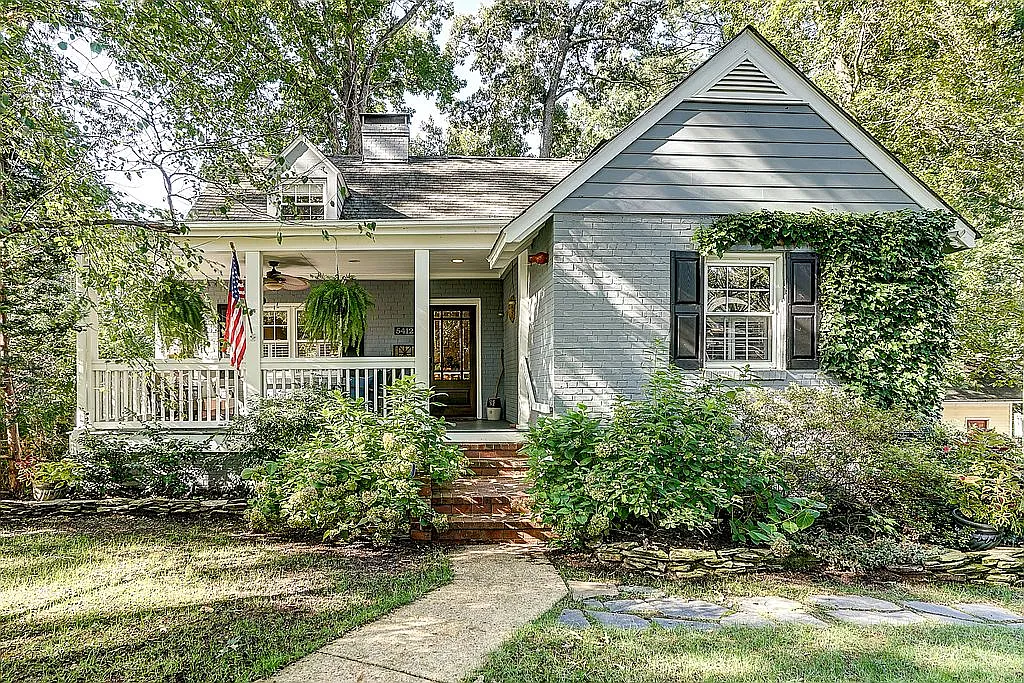
Our first home on Dorchester Road in Westover Hills. Nearly 30 years later, this neighborhood still feels like the right answer.
If you're buying your first home in Southside Richmond, the 23225 ZIP code deserves a long look. It's home to some of the city's most character-rich neighborhoods, all within five miles of downtown, and all sharing proximity to the James River Park System, one of Richmond's most valuable assets.
But 23225 is not one thing. It covers a range of neighborhoods, each with its own personality, price point, and pace. Understanding those differences is the real homework, and it matters more than any single listing you'll click on.
The 23225 Market at a Glance
Let's start with what the numbers tell us. The 23225 ZIP code covers a wide swath of Southside, and the neighborhoods within it are moving at different speeds and price levels. Here's a snapshot.
Median Home Prices by Neighborhood
Trailing 12 months, multiple sources
Every one of these neighborhoods is trading above the Richmond city median of $415,000. That's not a coincidence. Proximity to the James River, walkability to local restaurants and parks, and housing stock with genuine architectural character all support pricing. But there's still meaningful spread within each neighborhood, especially for buyers willing to take on a project or look at the smaller end of the inventory.
Median Days on Market
How quickly are homes going under contract?
In Woodland Heights and Westover Hills, well-priced homes are going under contract in about two weeks. That means your financing, your agent relationship, and your ability to make a confident decision all need to be ready before you start touring seriously. Stratford Hills gives you a bit more breathing room, but 31 days still isn't "slow" by any national standard.
The Neighborhoods, One by One
Each of these neighborhoods shares the 23225 ZIP code, and they're all within a few miles of each other. But the day-to-day experience of living in them can feel quite different. Here's what sets each one apart.
Historic · Walkable · River-Adjacent
Westover Hills
Westover Hills is where Heather and I started, and honestly, it's still the neighborhood I find myself comparing every other Southside area to. First platted in the 1920s after the Boulevard Bridge (locals still call it the Nickel Bridge) connected Byrd Park to Southside, it was designed from the beginning for people who wanted walkable streets, real architecture, and quick access to the city.

The Nickel Bridge: five minutes to downtown, and the reason Westover Hills exists in the first place.
The housing stock here is the kind that makes you slow down during a showing. You'll see Colonial Revivals, Tudors, Spanish Mission homes, Cape Cods, Arts & Crafts bungalows, and a handful of mid-century modern builds, most dating from the 1920s through the 1960s. Typical homes run three to four bedrooms in the 1,500 to 2,500 square-foot range, set on leafy lots along narrow, often one-way residential streets that naturally limit through-traffic.
The vacancy rate here is effectively zero, which tells you everything about demand. When inventory does appear, it moves. Homes are selling roughly 9% higher year over year, and the median has climbed well above the rest of Southside.
Westover Hills has a higher entry point, but smaller or less-updated homes do come to market in the mid-$300s to low $400s. The tradeoff is usually cosmetic work or deferred maintenance, not location. If you can handle a kitchen from 1985 while you save for a renovation, you're buying into a neighborhood with one of the tightest supply-demand profiles in the city.

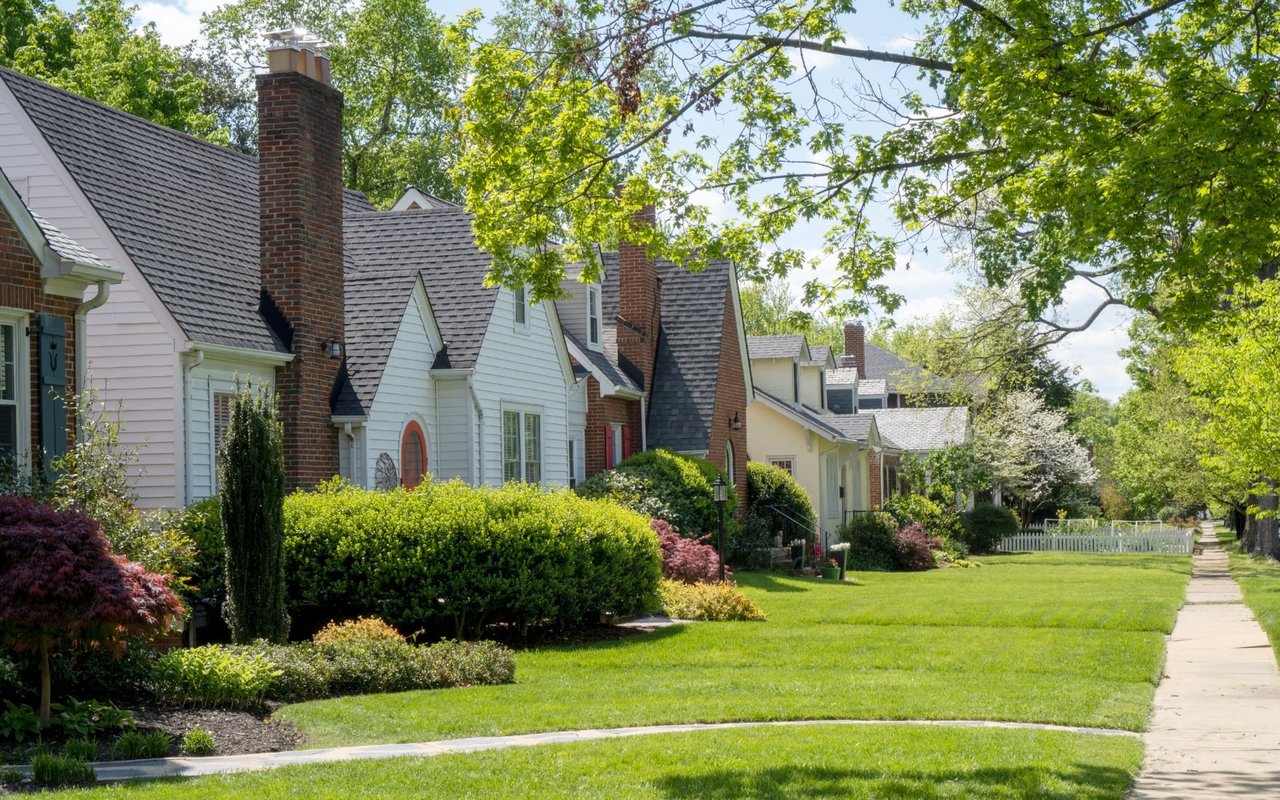
A typical Westover Hills street: mature canopy, mixed architecture, and the kind of curb appeal that doesn't need staging.

Cape Cod homes are a Westover Hills staple, often tucked behind mature landscaping on quiet one-way streets.
Streetcar-Era · Eclectic · Artsy
Woodland Heights
Woodland Heights is the neighborhood that feels like it's having a moment, and honestly, it's been having that moment for a while now. Originally developed in 1889 as one of Richmond's first planned streetcar suburbs, it earned national historic district recognition in 2009. About three-quarters of the homes here were built between 1895 and 1935, which gives the neighborhood a depth of character that newer areas simply can't replicate.
Architecturally, you'll find Victorian Queen Annes, Colonial Revivals, Craftsman bungalows, Tudor Revivals, Cape Cods, and Italianate Four Squares. It's the kind of neighborhood where every block looks a little different, and that's by design. The dining and nightlife scene along Semmes Avenue and Forest Hill Avenue has exploded: Laura Lee's, Zombie Pizza, The Veil, Stella's, Little Nickel, Crossroads Coffee, and Janet's are all within walking distance for many residents.
Prices are up 15% year over year, the fastest appreciation in this group. That's driven by both organic demand and a younger demographic. The median age is 40, the average household income is above $108,000, and the college-graduate rate sits above 71%.
Woodland Heights has a higher rental rate (about 48.5% of units) compared to the other neighborhoods on this list. That's not necessarily a negative, but it changes the feel of some blocks. When you're touring, pay attention to owner-occupancy patterns on the specific street you're considering. It can vary meaningfully from one block to the next.

Stella's is one of the neighborhood spots that makes Southside feel like a small town inside a city. Grab coffee, pick up groceries, and run into your neighbor on the patio.
Park-Centric · Walkable · Active Community
Forest Hill
Forest Hill is the neighborhood where the park is the personality. The 105-acre Forest Hill Park anchors the community with trails, pickleball and tennis courts, a playground, a lake, the historic Stone House, and the South of the James Farmers Market, which runs year-round on Sundays from 10 a.m. to 1 p.m. in the park. (If you've never been, go before you buy. The vibe at that market on a Sunday morning will tell you a lot about what it's like to live here.)
Homes date mostly from the early to mid-1900s: wood-framed cottages, Craftsman bungalows, Cape Cods, Tudor Revivals, and Colonial Revivals, many on well-manicured lots. The neighborhood is bike-friendly with lanes along Forest Hill Avenue, and walkable to restaurants like Little Nickel, O'Toole's, Crossroads, and Outpost Richmond. The Veil Brewing Co. is just a bit farther down Forest Hill Avenue.
Forest Hill's average household income is the highest of this group at roughly $143,000, which tracks with the area's strong demand. It's also close to quick downtown access via the Manchester Bridge or Powhite Parkway, and only about five miles from the heart of the city.
Forest Hill is more accessible than Westover Hills from a price standpoint, and the proximity to Forest Hill Park and the farmers market makes it feel like a complete neighborhood from day one. Homes at the lower end of the range (high $300s to low $400s) tend to be smaller or in need of updates, but the location premium here is real and well-supported.

Forest Hill Park: 105 acres of trails, courts, a lake, and the South of the James Farmers Market every Sunday. This is the shared backyard for the entire 23225.
Mid-Century · Nature-Forward · River Access
Stratford Hills
Stratford Hills is where Southside starts to feel a little more like a mountain town. The homes are tucked into heavy tree cover on spacious lots, and wildlife sightings are genuinely common. This is the neighborhood closest to Pony Pasture and Huguenot Flatwater, two of the most popular access points in the James River Park System, and many residents can walk to both.
The housing stock is primarily mid-century: ranch homes, Cape Cods, split-levels, and some newer construction sprinkled in. Homes typically range from about 900 to 3,000 square feet, with architectural styles dating from the 1940s through the 1960s. The lots are bigger here, and the pace feels noticeably quieter.
At a median of $508,000 and 31 days on market, Stratford Hills gives first-time buyers a bit more time and a bit more square footage per dollar compared to the neighborhoods closer to the river bluffs. The owner-occupancy rate is nearly 88%, which is the highest in this group, and the neighborhood's average household income is around $129,000.
If you want outdoor access and you're not in a rush to be steps from the restaurant scene, Stratford Hills gives you more room to breathe, both in lot size and in pace of sale. The lower end of the market (mid-$300s) includes ranch homes that are solid candidates for updates. Plus, Forest Hill Avenue puts Publix, Food Lion, and a growing roster of locally owned restaurants right in your daily routine.
Pony Pasture: one of the most popular access points in the James River Park System, and a short walk from many Stratford Hills homes.

The Veil Brewing Co. on Forest Hill Avenue. The food and drink scene along this corridor is a shared perk for all four neighborhoods.
Side-by-Side Comparison
What All Four Neighborhoods Share
Despite their differences, these neighborhoods share a set of lifestyle advantages that set 23225 apart from other ZIP codes in the metro area.
- James River Park System access (Buttermilk Trail, Belle Isle, Pony Pasture)
- Walking-distance restaurants and coffee shops along Forest Hill Avenue
- South of the James Farmers Market, year-round Sundays in Forest Hill Park
- 5-minute drive to downtown via Nickel Bridge or Manchester Bridge
- Mature tree canopy and established streetscapes
- Richmond Public Schools plus nearby private options (Good Shepherd, Sabot, Trinity)
- Bike lanes on Forest Hill Avenue and riverside trail connections
- Forest Hill Park: 105 acres of trails, courts, events, and green space
What First-Time Buyers Should Know About Older Homes
Almost every home in these neighborhoods was built before 1978, and many go back to the 1920s and '30s. That's a big part of the charm, but it also means you need to think about a few things that don't apply to new construction.
Lead-based paint is a real possibility in any home built before 1978. If you're planning cosmetic updates or larger renovations, budget for testing and lead-safe work practices. Your inspector should flag this, but don't assume it's been addressed just because the home looks updated.
Systems matter. Older homes may have aging HVAC, plumbing, or electrical systems. Ask about the age of the roof, the water heater, and the furnace. These aren't deal-breakers, but they are budget items, and you want to know about them before you submit an offer, not after.
Flood and water. Some properties near the James River or Reedy Creek may fall within FEMA flood zones. Verify flood risk through FEMA's Flood Map Service Center as part of your due diligence, and factor flood insurance into your monthly cost estimates if applicable.
Smart Steps Before You Start Touring
In a market where good homes in these neighborhoods can go pending in two weeks, your preparation is your competitive edge. Here's what I'd tell any first-time buyer sitting across from me at our first meeting.
Get preapproved, not just prequalified. A preapproval letter with verified income and assets carries real weight in a multiple-offer situation. Talk to your lender early and know your comfortable monthly number before you fall in love with a house.
Decide what kind of neighborhood life you want. Do you want to walk to restaurants and a brewery after work? Woodland Heights or Forest Hill. Want to kayak on a Tuesday morning? Stratford Hills. Want the most established, historically rich streetscape on Southside? Westover Hills. Nail this early and you'll waste far less time touring homes in neighborhoods that don't fit.
Budget for the house, not just the purchase price. Older homes in these neighborhoods are full of potential, but potential costs money. Build a reserve for the first-year surprises: the HVAC that limps through one more summer, the fence that looked fine in photos but isn't, the bathroom that functionally works but makes you wince every morning.
For any home near water, do the flood work early. Don't wait until you're under contract to discover your dream home sits in a flood zone. Check FEMA maps before you tour.
Ready to Start Looking?
Buying your first home in 23225 is very doable with the right preparation. I've helped buyers navigate these neighborhoods for years, and I'd love to help you find the right fit.
Frequently Asked Questions
What is the housing market like for first-time buyers in 23225?
The 23225 market is competitive across the board. Median prices in the four core neighborhoods range from $508,000 (Stratford Hills) to $632,000 (Westover Hills), and homes are going under contract in two to four weeks. Preparation and preapproval are essential.
Which 23225 neighborhood offers the most character?
Westover Hills and Woodland Heights both offer exceptional architectural variety. Westover Hills has a wider range of styles (Tudor, Colonial Revival, Spanish Mission) on quieter streets, while Woodland Heights offers more of the streetcar-era Craftsman and Victorian charm, plus a stronger dining and nightlife scene.
Are there HOA rules in these neighborhoods?
Generally, no. Unlike the planned communities farther south in Chesterfield (Brandermill, Woodlake), these are established City of Richmond neighborhoods without mandatory HOA structures. That means more freedom for exterior changes, but it also means you're responsible for your own maintenance standards.
Should I worry about lead paint in these older homes?
Any home built before 1978 may contain lead-based paint. This applies to virtually every home in these four neighborhoods. Testing is straightforward and inexpensive, and it should be part of your inspection plan. If you're planning renovations, budget for lead-safe practices from the start.
How close are these neighborhoods to downtown Richmond?
All four are within about five miles of downtown. Via the Nickel Bridge or Manchester Bridge, you're looking at a 10 to 15-minute drive in normal traffic. Forest Hill Avenue and Semmes Avenue provide direct surface-street routes, and Powhite Parkway is nearby for highway access.
What outdoor amenities are shared across 23225?
The James River Park System is the headline: the Buttermilk Trail, Belle Isle, Pony Pasture, Huguenot Flatwater, and the Floodwall trail are all accessible from these neighborhoods. Forest Hill Park (105 acres, with courts, trails, and the farmers market) is the shared gathering spot, and Riverside Drive offers some of the best views in the city.