"It's been vacant as long as I can remember."
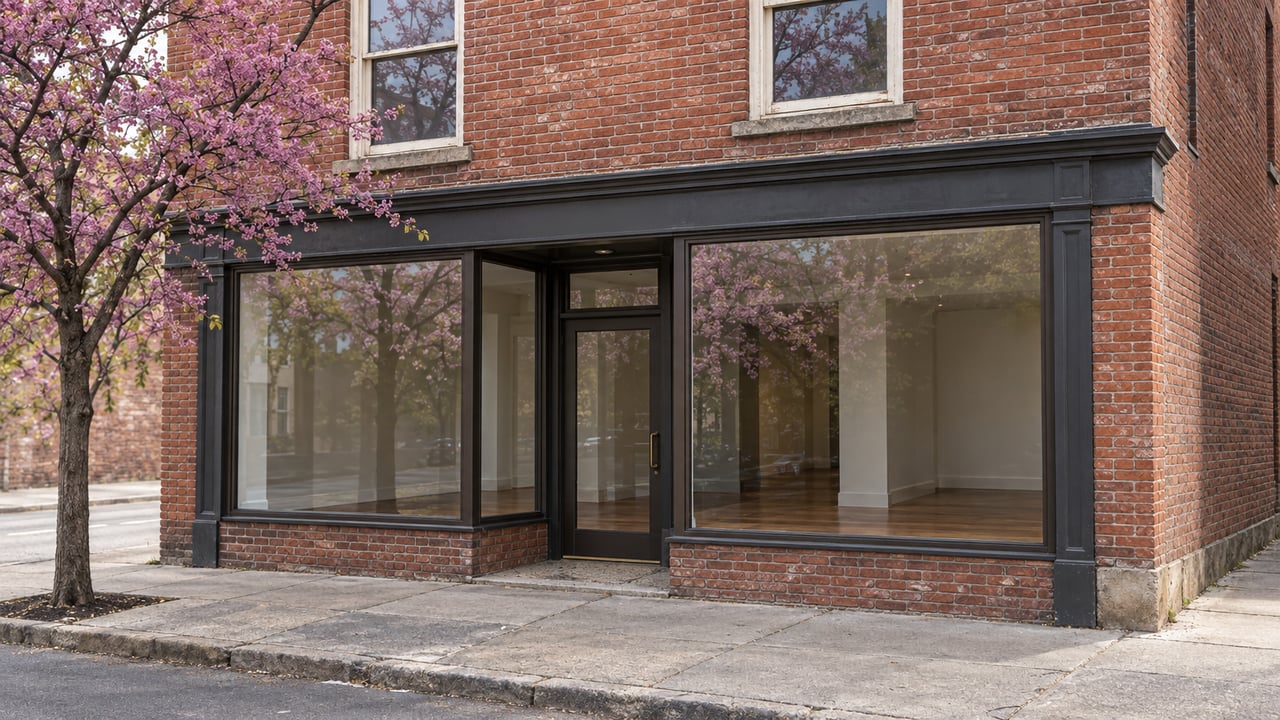
That's how Michael Kucera described 3318 Semmes Ave to Richmond BizSense this past spring, a two-story building at the edge of Woodland Heights that has spent decades doing nothing in particular. Kucera isn't a developer scouting Richmond for a play. He's lived in the neighborhood for twenty years, and his kids attend Patrick Henry School of Science & Arts, which sits directly across the street from the building he just bought.
That detail matters more than it looks like it should. Everything durable that has happened in Woodland Heights this year, the building coming back to life, the concert series that fills its sidewalks once a month, got built by people who already had a key to the neighborhood. Nobody from outside is placing a bet here. The people placing bets are the ones who cross that particular street twice a day.
What's Actually Happening at 3318 Semmes
The building has a longer résumé than its recent boarded-up decades suggest. It went up in 1921 and started life as a pharmacy, first the Early Drug Store, then the Semmes Avenue Pharmacy. Through the 1970s and 80s it cycled through a run of restaurants: The Country Key, The Alibi, Don't Worry Be Happy. At one stretch it was a foosball parlor. Then it just stopped being anything.
Kucera and his friend Justin White, who owns Advanced Plumbing, closed on the property in late April 2026 for $343,000. Within weeks they'd filed preliminary permits, and Richmond's Board of Zoning Appeals granted the special exception the project needed to re-establish restaurant use on a building that had sat empty long enough to lose that right by default.
The plan is straightforward and specific. The ground floor, about 1,700 square feet, becomes a shell space that White and Kucera will lease to a local restaurant operator. They've been in conversation with what BizSense described as local, successful restaurateurs, though no lease was signed as of the reporting. The basement gets storage and bathrooms. Upstairs becomes two apartments, a one-bedroom and a two-bedroom. White is also pursuing a special-use permit for patio dining fronting Semmes Avenue, which would put outdoor seating directly on one of the neighborhood's most walked stretches.
White estimated the buildout at $200,000 to $300,000, with Obsidian Inc. and O'Neil Engineering Services handling design, and a target completion of late summer or early fall 2026. That puts the project's finish line right around now, though no operator name has surfaced publicly yet.
The Corridor It's Joining
The reason White and Kucera framed this as restaurant space rather than retail or office isn't guesswork. It's geography. The building sits within a short walk of Laura Lee's, WPA Bakery, Thirsty's, and Crossroads Coffee, a cluster that has already turned this stretch of Semmes into something close to a restaurant row without anyone formally naming it that.
A vacant building next to four operating food businesses isn't dead weight so much as an obvious gap. Kucera and White seem to have read it that way, betting that a decades-empty corner surrounded by four functioning restaurants was never really a hard sell, just a building nobody with local knowledge had gotten around to yet.
Porch Night Runs on the Same Logic
A few blocks over, the neighborhood's other defining project of the year runs on an almost identical model. Porch Night, known for its first three seasons as Tiny Porch, is a grassroots concert series that launched in spring 2023 and outgrew its original name once organizers realized "tiny" no longer fit.
The format hasn't changed. Three host porches, each featuring two sets, six acts total, held on a Sunday evening once a month from June through October. The September 20 show put host porches across the neighborhood, including one at 112 W 29th billed as an all-Woodland Heights musician lineup, with food vendors Westray's Finest Ice Cream and Cocina Calle set up at W 31st and Porter. Every performer volunteers their time, and the only ask is that attendees tip in cash or Venmo.
Organizers built a boundary into the concept on purpose. All host porches stay within the neighborhood's roughly one-square-mile footprint, and the event's own FAQ asks visitors coming from outside Woodland Heights to walk, bike, or take a GRTC bus rather than drive in, since the whole point is a pedestrian-friendly evening rather than a parking problem. Councilmember Stephanie Lynch's office has helped print and distribute the fliers, which is about as local as event marketing gets.
Like the Semmes Ave building, Porch Night wasn't commissioned by a city department or bankrolled by an outside promoter. It's residents deciding that their own stoops were worth turning into a stage, then keeping the whole thing walkable enough that it stays that way.
The Rest of the Weekend Doesn't Wait Either
None of this happens in isolation from the neighborhood's regular rhythms. Forest Hill Park hosts a Sunday farmers market that draws Woodland Heights residents out for produce and coffee before the rest of the day gets going, and the park doubles as one of the more direct routes into the James River Park System. The Reedy Creek entrance, just steps from the neighborhood, opens onto the South Bank trails that cyclists and runners already treat as an extension of their own block.
None of these things individually would be surprising. Vacant buildings get bought all the time. Neighborhoods throw concerts. Parks host farmers markets. What's harder to find, and what actually distinguishes Woodland Heights this year, is how consistently the people doing the buying and the organizing turn out to already live there. A plumber and a father whose children cross Semmes Avenue on foot decided a boarded-up pharmacy was worth $343,000 and a full renovation. A handful of neighbors decided their porches were worth turning into a monthly concert hall, then wrote the rules to keep it that way. Neither project needed an outside investor to see the opportunity, because the opportunity was never hidden. It was just waiting for someone who walked past it enough times to stop overlooking it.
If you're weighing a move into Woodland Heights or trying to make sense of what a neighborhood like this actually offers day to day, Shannon Harton can walk you through what's changing on the ground, corner by corner, before you make a decision based on a listing photo alone.