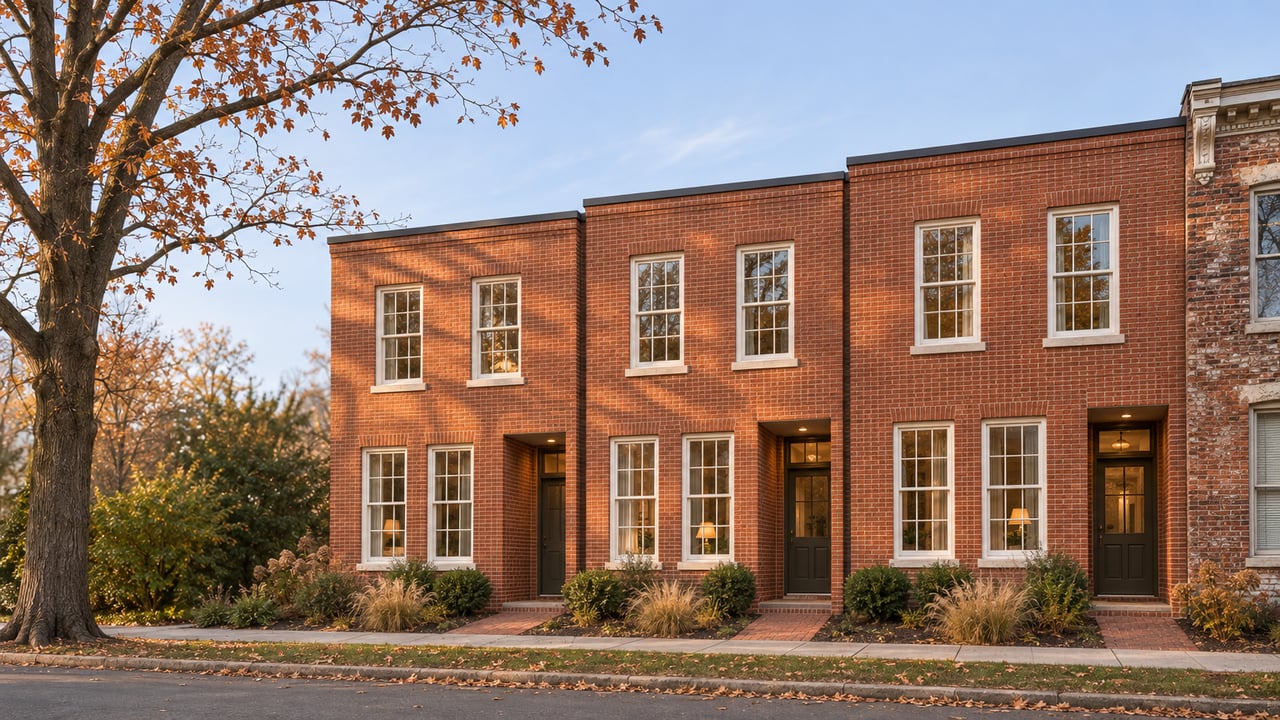
Keith Carter found his biggest building site by shopping for a watch. Richmond BizSense reported that while he was at the Cowardin's Jewelers store at Willow Lawn, a conversation turned to land in the 900 block of North 36th Street in Chimborazo. That land had once been owned by the family behind the jeweler. "I don't think I'd ever been on that street," Carter told the outlet. He went on to buy two lots there, tear down the two houses on them and build 10 homes in their place.
New homes in Church Hill and Union Hill now go up on sites like that one. The new supply comes from land that someone has to go out and find: an old family estate, the yard beside a church, a church parking lot. Building on those sites is expensive, and the cost shows up on the price sheet. If you're comparing new construction here against an older resale, you should know where that price floor comes from before you start comparing finishes.
The Flips Ran Out First
Carter told BizSense he has "probably flipped a couple hundred properties" over 15 years, many of them in Church Hill and Northside. Then he described what changed: "it's getting challenging now to find good flips, because quite frankly we've bought most of them already."
So he switched to empty lots and teardown sites. In those projects, one house on a large lot becomes several homes on smaller subdivided lots. The three projects below follow that pattern. Each one was built on land that had been a family's estate or a church's property rather than a house for sale.
Three Sites, Three Kinds of Land
The estate lots on 36th Street. Carter's company, K.C. Enterprises of VA, bought the two Chimborazo lots in 2022 for $550,000 and built a row of 10 homes there: four pairs of townhomes with a detached home at each end. It sits just north of the Bacon Retirement Community and Bill Robinson Park. Carter put the total project cost at $5.5 million. That works out to about $550,000 per home before any profit. The total includes a sewer line he had expected to find under the road. It wasn't there, because the homes across the street are served from a rear alley, so he paid what he called "multi six figures" to extend one.
Church land on North 26th Street. Olivet Gardens is a plan for 10 townhomes beside the century-old Mount Olivet Church at 1200 through 1220 N. 26th St. Tarvaris McCoy of the Real McCoy Cos. is developing it with Manchester-based The Hanson Co. BizSense covered the groundbreaking in September 2025. At the time, McCoy put the total cost, land and construction included, at around $4 million, or roughly $400,000 per home. Six of the homes were planned with small accessory dwelling units in the rear that could be used as garages. McCoy said churches are landowners with "things to offer," and called pairing communities of faith with development "a big part of what I do."
A church's parking lots in Union Hill. In September 2025, a group made up of UrbanCore Construction, Keel Custom Homes and developer Matt Jarreau paid $2.15 million for the former Great Hope Baptist Church at 2101 Venable St. The deal also included the church's half-acre parking lot at 2111 to 2119 Venable and a smaller lot at 810 to 812 N. 22nd St. The group sold the church building itself in mid-April 2026 for just under $800,000 to an LLC tied to Lightwell Development, a Hampton Roads firm. Subtract that resale and the two parking lots cost the group roughly $1.35 million. Spread over the 19 townhomes planned there, that's about $71,000 of land per home before any work begins.
Each site costs a little differently, but all three put the cost of a new Church Hill home somewhere between $400,000 and $550,000 before the builder takes a margin.
What That Floor Looks Like on a Price Sheet
The asking prices follow those costs. On 36th Street, the detached end homes presold and closed earlier in 2025 at $660,000 and $675,000, and the townhomes were priced in the upper $500,000s. In August 2026, BizSense reported that Carter had just sold the last house in the row.
On Venable Street, the plan has grown to 22 townhomes. Nineteen go on the church's two parking lots, and three go on vacant land across 22nd Street that UrbanCore bought in 2024. As of BizSense's August 2026 report, the first four were built. Most of the homes are priced from the low $500,000s, and the three along 22nd Street are around $440,000.
At those prices, buyers get features older East End houses rarely have. All but one of the 36th Street homes have a single detached garage, and the home at 901 kept a two-car garage from the house that stood there before. "It's hard to get a garage in Church Hill," Carter told BizSense. The Union Hill townhomes are three-bedroom, 2½-bath plans of about 1,800 square feet with covered porches and rooftop terraces. Chris Wolf Architecture designed varied facades for them around cobblestoned Burton Street, with standing-seam metal roofs, dormers and two-story porches.
How Those Prices Compare With the Resale Market
The regional MLS publishes monthly figures for Area 60, the market area Church Hill homes are reported under. Its October 2026 report puts the median condo and townhouse sale at $350,000 for January through October 2026. The single-family median for the same period was $440,000.
That puts a new Union Hill townhome in the low $500,000s well above the area's typical townhouse sale, and even above the typical detached house sale. The premium pays for what the new builds have: new systems, garages or terraces, and no renovation to plan. It also pays for what the land cost. A builder who spent $550,000 per home on 36th Street can't price at the townhouse median, because that number comes from older homes on land bought years ago.
The two halves of the market are moving at different speeds this fall. Area 60's single-family side had 1.6 months of supply in October 2026, and those homes sold for 99.6% of original list price. On the condo and townhouse side, inventory rose to 39 in October 2026 from 32 a year earlier, and months of supply went from 3.6 to 4.5. Townhouses sold in this area from January through October averaged 54 days on market, compared with 19 for single-family homes. Across all of Richmond City in October, the condo and townhouse median was $320,000 and the single-family median was $444,000. For a townhouse buyer, the East End is the more negotiable side of the market right now, even though new construction sets the top of its price range.
Where the Sub-$400,000 New Build Went
Carter's next move shows the same math from the other direction. After finishing in Chimborazo, he started planning 24 detached homes on about 3 acres at 3628 Cottrell Road, in the Cottrell Farms area just south of Walmsley and Broad Rock boulevards. The land there is part of a roughly 5-acre property his company bought in 2025 for $260,000. BizSense reported that he wants to keep those homes, also about 1,800 square feet with three bedrooms and 2½ baths, below $400,000.
Compare the land. In Chimborazo, he paid $550,000 for space for 10 homes. On Cottrell Road, he paid $260,000 for enough acreage to plan 24 homes and possibly more. A similar floor plan costs about $150,000 to $200,000 less across the river, mostly because of the dirt underneath it. A buyer whose budget for new construction tops out under $400,000 is now shopping in Richmond's Southside, not on Church Hill's side streets. Carter is still seeking a special-use permit for that site and has said he hopes to bring the homes to market in spring 2027 if it's approved by year's end.
What This Means for a Buyer Comparing This Winter
The next wave of supply in Union Hill is already scheduled. When BizSense reported in August, Jarreau said utilities for the remaining 15 Venable Street townhomes would be finished within about 30 days, with construction possibly starting in September and completion targeted for spring or summer 2027. Next door, Lightwell's Tim Foley is converting the 1891 church building into 19 apartments, with part of the sanctuary planned as live-work space for residents. He told BizSense Lightwell is investing $5 million in the project and is targeting completion in December or early 2027. "We're finding more churches are wanting to convert," Foley told BizSense.
That gives a buyer comparing Church Hill with other neighborhoods two clear options. An older resale townhouse costs less, and Area 60 had more townhouses for sale this October than last. A new build costs more because of the land it sits on, and the developers' own cost figures put that price well above the area's townhouse median. For a broader look at the area, our Central Richmond neighborhood page and our piece on the small group of owners behind Church Hill's restaurant openings are good places to start.
If you're weighing a new Church Hill townhome against an older house a few blocks away, The Harton Team can compare them for you line by line: what each one costs, what you'd still need to fix in the older home, and how much room there is to negotiate this winter. Schedule a personalized market consultation, and we'll start with the addresses you have in mind.