As we look ahead to the 2026 housing market, one question dominates the conversation among buyers and sellers alike: will affordability finally improve? After several years defined by elevated borrowing costs and constrained inventory, many households have delayed major real estate decisions, waiting for conditions to normalize.
Encouragingly, the data suggest that moment has arrived.
Affordability reached its strongest level in three years during 2025, and economists broadly agree that this improvement should continue into 2026. Their outlook is grounded in three fundamental drivers of the housing market: mortgage rates, available inventory, and home price trends. Together, these forces are gradually restoring balance.
Mortgage Rates Have Moderated—and Stability Is the Key Story
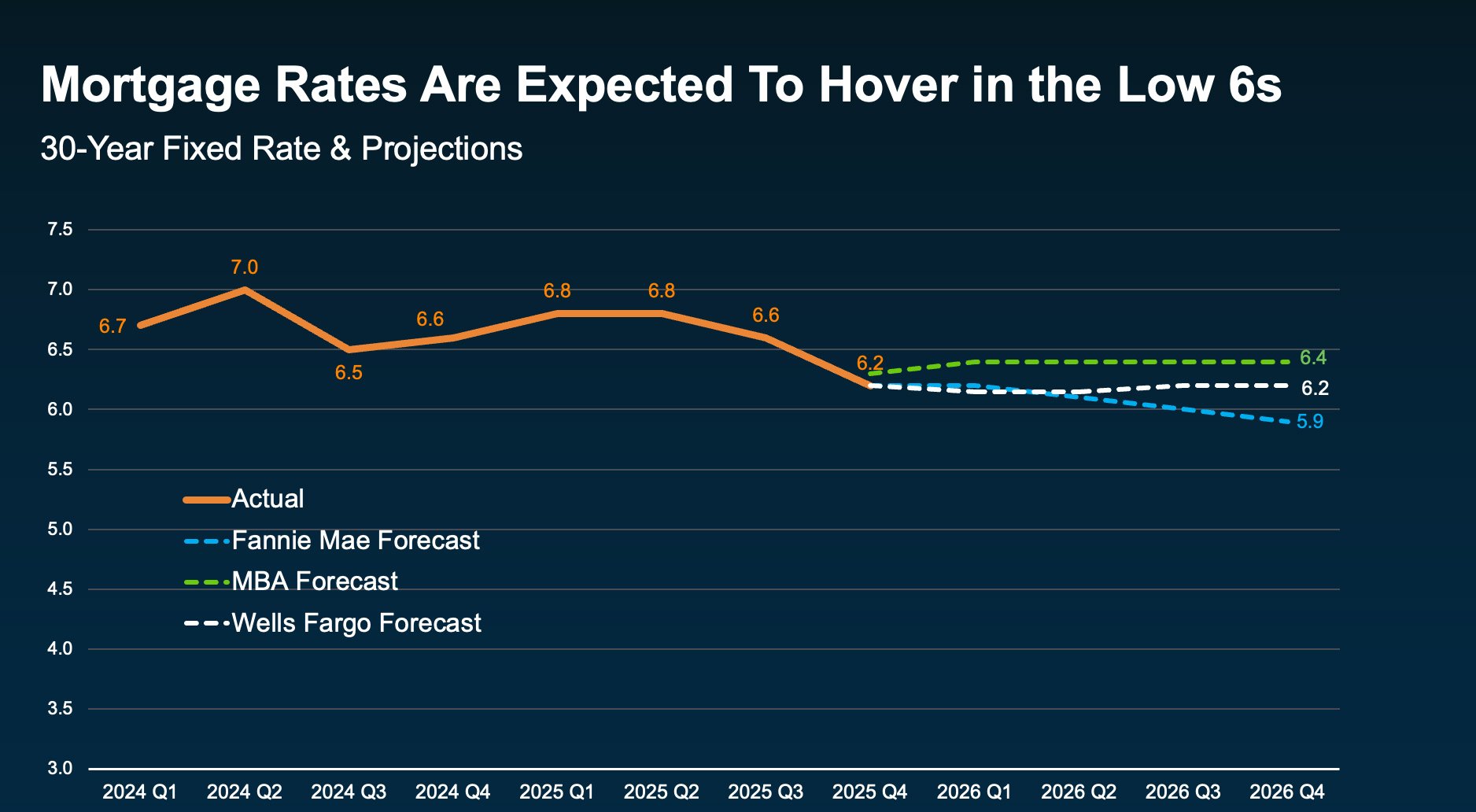
Mortgage rates have already retreated meaningfully from their recent peak, declining by nearly a full percentage point over the past year. While that shift may appear incremental, its impact on purchasing power is substantial.
Looking ahead, most forecasts call for rates to remain relatively stable, hovering in the low 6% range throughout 2026. The precise trajectory will depend on broader economic conditions, labor market strength, and future decisions by the Federal Reserve. However, the most important takeaway is this: rates today are materially lower than they were a year ago, creating a more favorable environment for well-positioned buyers and sellers.
For buyers, lower rates translate into reduced monthly payments and increased purchasing flexibility—often enough to bring higher-quality or better-located properties within reach. For sellers, it is increasingly clear that mortgage rates in the 6% range represent the new normal. With substantial equity gains accumulated over recent years, many homeowners will find that a move remains both practical and advantageous.
Inventory Is Expanding, Restoring Choice and Leverage
Another meaningful shift is unfolding on the supply side. In 2025, active inventory increased by approximately 15%, easing the intense scarcity that had defined the market for years. Buyers regained something that had largely disappeared: meaningful choice, time for due diligence, and negotiating leverage.
These inventory gains have also played a critical role in cooling price acceleration, further supporting affordability. While the pace of growth is expected to moderate, Realtor.com projects that available inventory will rise an additional 8.9% in 2026.
For buyers, this means expanded options and improved negotiating dynamics. For sellers, it underscores the importance of strategic pricing and thoughtful presentation. In a more balanced market, accuracy matters.
Home Price Growth Is Normalizing, Not Reversing
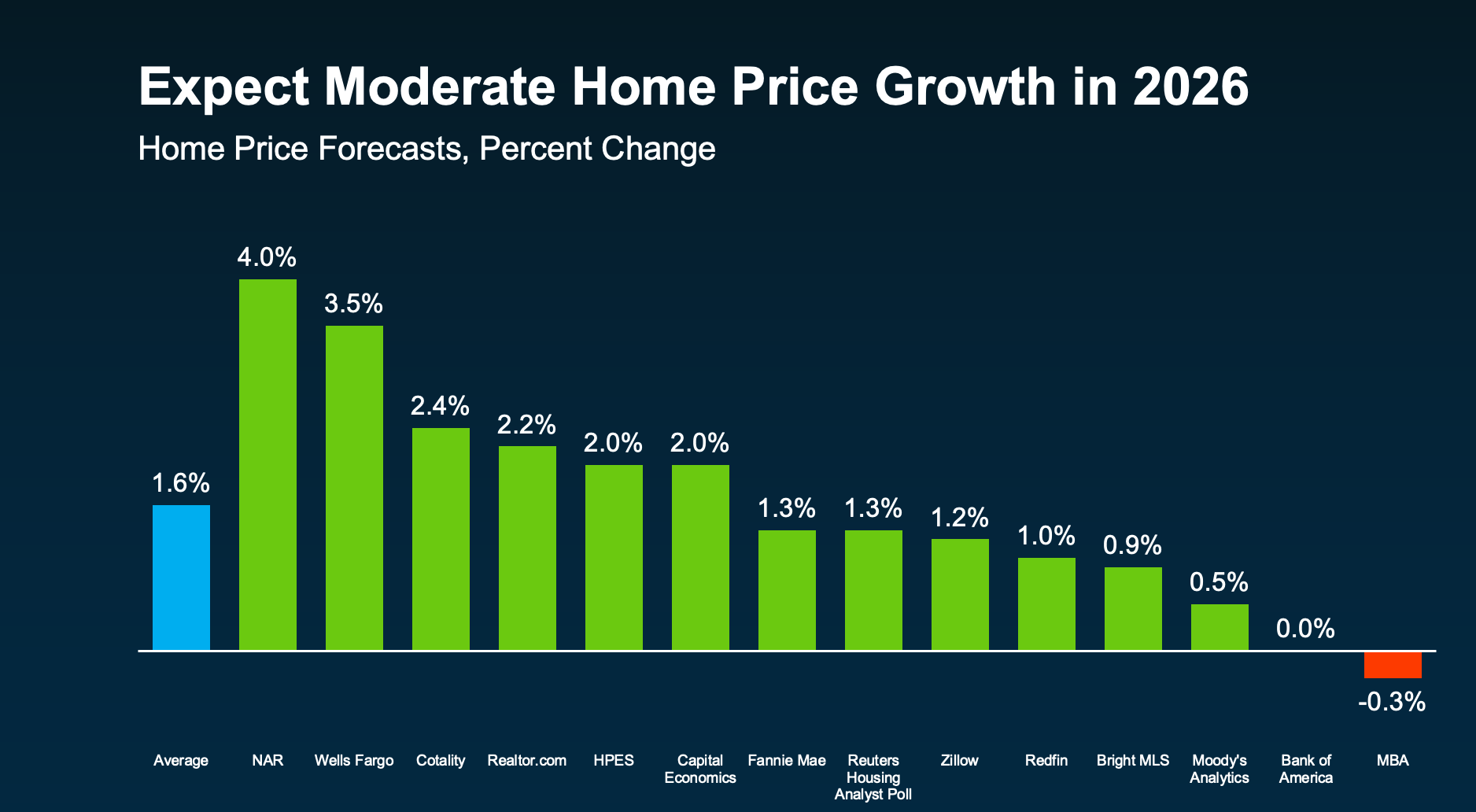
With supply improving, upward pressure on prices has eased. The consensus among economists is that home values will continue to rise nationally in 2026—but at a more sustainable pace. On average, forecasts call for price growth of approximately 1.6%.
This moderation stands in contrast to more alarmist narratives suggesting an imminent price correction. While local outcomes will vary—some markets will outperform the national average, others may soften slightly—the overall trajectory remains positive.
As Realtor.com succinctly notes:
“For homebuyers and sellers, the shift signals a more balanced market—one where price growth steadies, rate relief offers breathing room, and negotiating power tilts subtly toward buyers.”
For buyers, slower appreciation brings predictability and fewer budgetary surprises. For sellers, it preserves equity while supporting a healthier, more liquid market.
Transaction Activity Is Poised to Increase
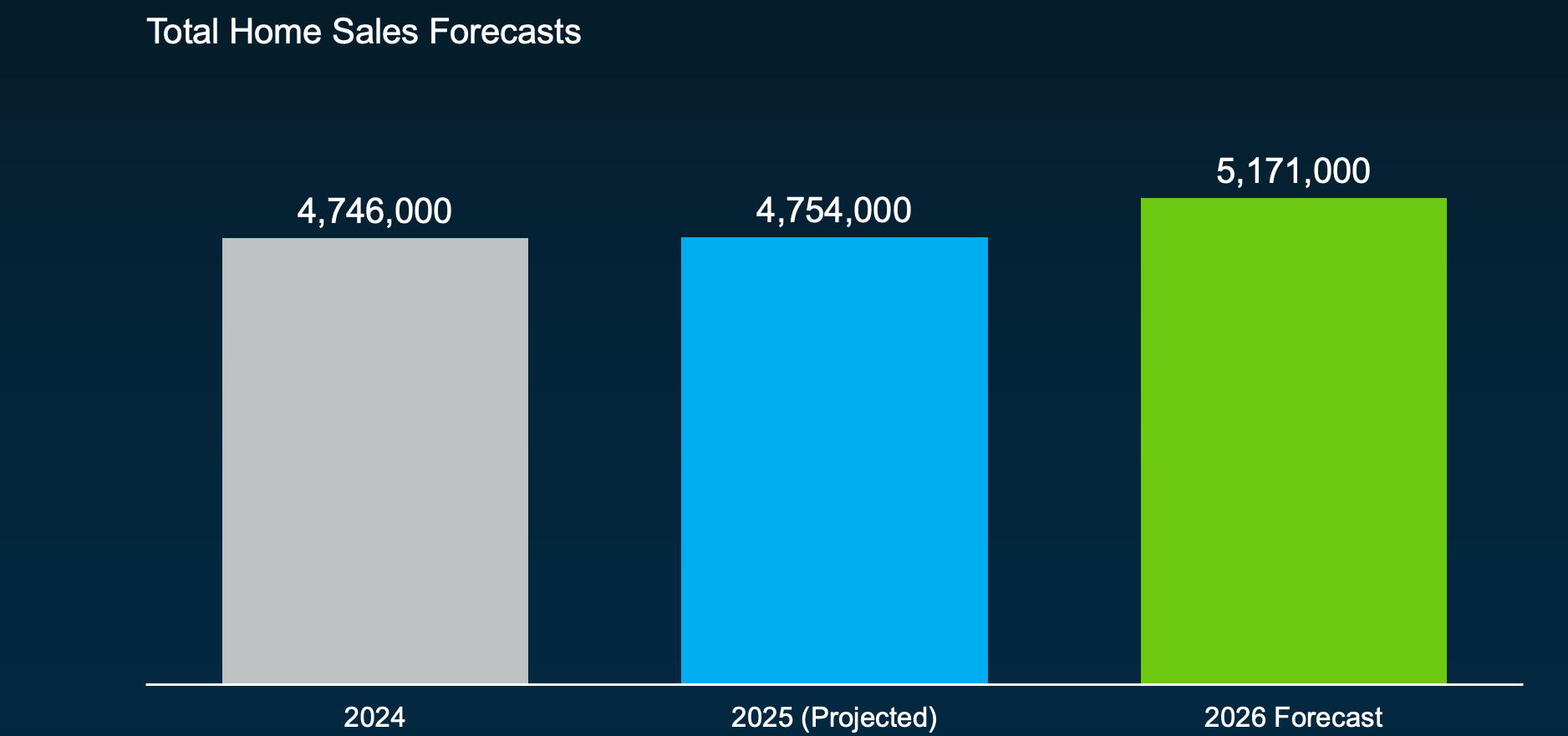
Taken together, these trends point to a modest but meaningful increase in transaction activity in 2026. Improved affordability, expanding inventory, and stable pricing create conditions that allow more households to act.
As Mischa Fisher, Chief Economist at Zillow, explains:
“Buyers are benefiting from more inventory and improved affordability, while sellers are seeing price stability and more consistent demand. Each group should have a bit more breathing room in 2026.”
In practical terms, more buyers will re-enter the market, and more sellers will find qualified demand for well-positioned properties.
The Bottom Line
Affordability will not improve overnight. However, with several structural trends moving in the same direction, 2026 is shaping up to be a year defined by balance, predictability, and opportunity—conditions the housing market has not offered in some time.
For those considering a move, this may represent a window worth evaluating carefully. To understand how these national trends translate into opportunities in your local market, please call me anytime at (804) 416-HOME or email me at [email protected] and let's plan a meeting so I can provide insight tailored to your specific circumstances. I look forward to it!